

Laser Cutting and Fabrication for Complete Metal Parts
Laser cutting and fabrication from Wards gives manufacturers, OEMs and engineering teams one route from flat sheet to finished metalwork. We can laser cut the profiles, fold suitable blanks, weld assemblies, machine additional features and complete fabrication work in-house, reducing the number of suppliers needed to manufacture a finished component.
Laser Cutting and Fabrication at a Glance
Laser Cutting and Fabrication Under One Roof
Many buyers do not actually need laser-cut parts. They need a finished bracket, frame, guard, panel, enclosure, support or fabricated assembly. Our laser cutting and fabrication service is built around that wider requirement.
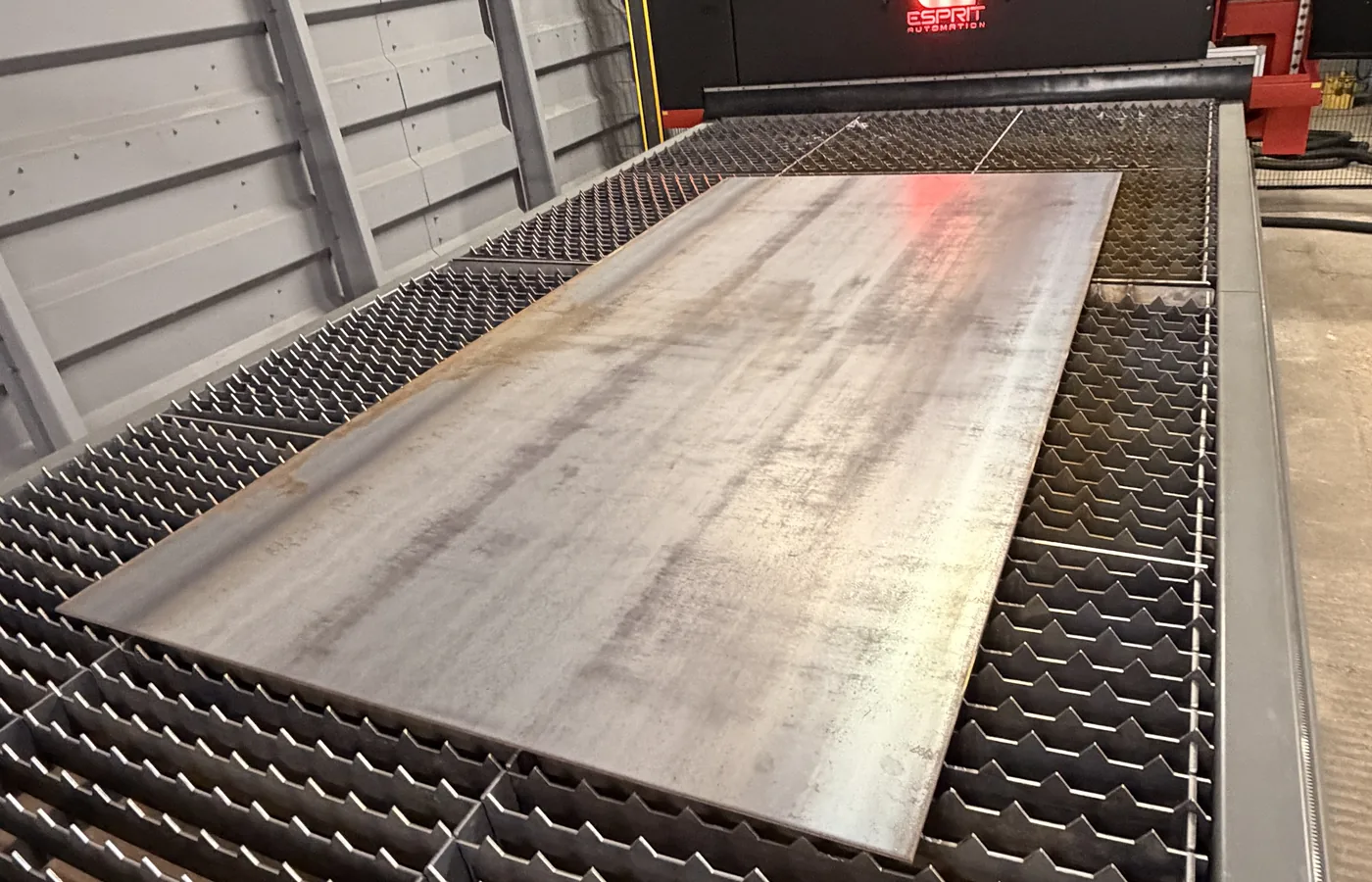
The process begins with accurate flat profiles produced on our 6kW Esprit Photon HD fibre laser. The 4000 × 2000mm cutting area supports both detailed small components and larger sheet-metal blanks. Suitable parts can then move directly into folding, welding, machining and fabrication within the same Wards workshop.
Combining these operations removes unnecessary supplier handoffs. Instead of buying flat blanks from one company, arranging transport to a folding subcontractor and then sending formed parts to a welder, Wards can review the whole manufacturing route before the first sheet is cut.
That matters because decisions at the laser stage can affect every process afterward. Hole positions, tabs, slots, bend clearances, edge geometry and material thickness all influence how efficiently the final part can be folded and fabricated. Laser cutting and fabrication works best when the complete component is considered from the start.
Six Services Within Laser Cutting and Fabrication
The strongest advantage of laser cutting and fabrication is the ability to combine processes rather than purchasing each operation separately.
Fibre Laser Cutting
Profiles, brackets, panels, gussets, plates and fabrication blanks produced directly from controlled digital geometry.
Press Brake Folding
Suitable laser-cut blanks can be folded into brackets, channels, guards, trays and formed panels before fabrication.
MIG & TIG Welding
Laser cutting and fabrication can continue into welded frames, brackets, housings, stainless assemblies and general industrial metalwork.
CNC Machining
Where parts need machined faces, bores, threads or features that are not suitable for the laser, Wards can review additional machining operations.
Complete Assemblies
Cut parts can be combined into finished fabrications instead of being returned to the customer as loose blanks.
Repeat Manufacturing
Approved fabricated components can be reviewed for repeat batches where drawings, revisions and production requirements are controlled.
What We Make with Laser Cutting and Fabrication
This route suits projects where the laser-cut profile is only the first stage of the job. Typical combined fabrication work includes both sheet-metal components and heavier fabricated assemblies.
Machine Guards
Laser-cut panels, access openings and mounting features combined with folded edges, welded frames and fixing points.
Frames & Supports
Cut base plates, gussets, tabs and connection details integrated into fabricated box-section, tube or plate assemblies.
Brackets & Mounts
Flat and folded brackets produced to drawing and supplied either as individual parts or welded into larger assemblies.
Panels & Enclosures
Sheet-metal panels with cut-outs, ventilation, apertures and formed flanges ready for assembly into equipment.
Plant & Machinery Parts
Laser cutting and fabrication can support replacement guards, supports, plates, frames and custom machine components.
Production Assemblies
Repeat fabricated components for OEMs where multiple cut parts, folds and welds combine into a finished product or subassembly.
Why Laser Cutting and Fabrication Should Be Planned Together
A fabrication is easier to manufacture when the individual parts are designed around the whole assembly. If a bracket is going to be welded into a frame, its profile can include locating features, clearance geometry or connection details specified by the design. If a panel is going to be folded, the flat pattern must work with the intended bend positions and tooling.
With laser cutting and fabrication managed by one supplier, these interactions can be reviewed before production. The cutting team is not working in isolation from the fabricators who will later handle the parts.
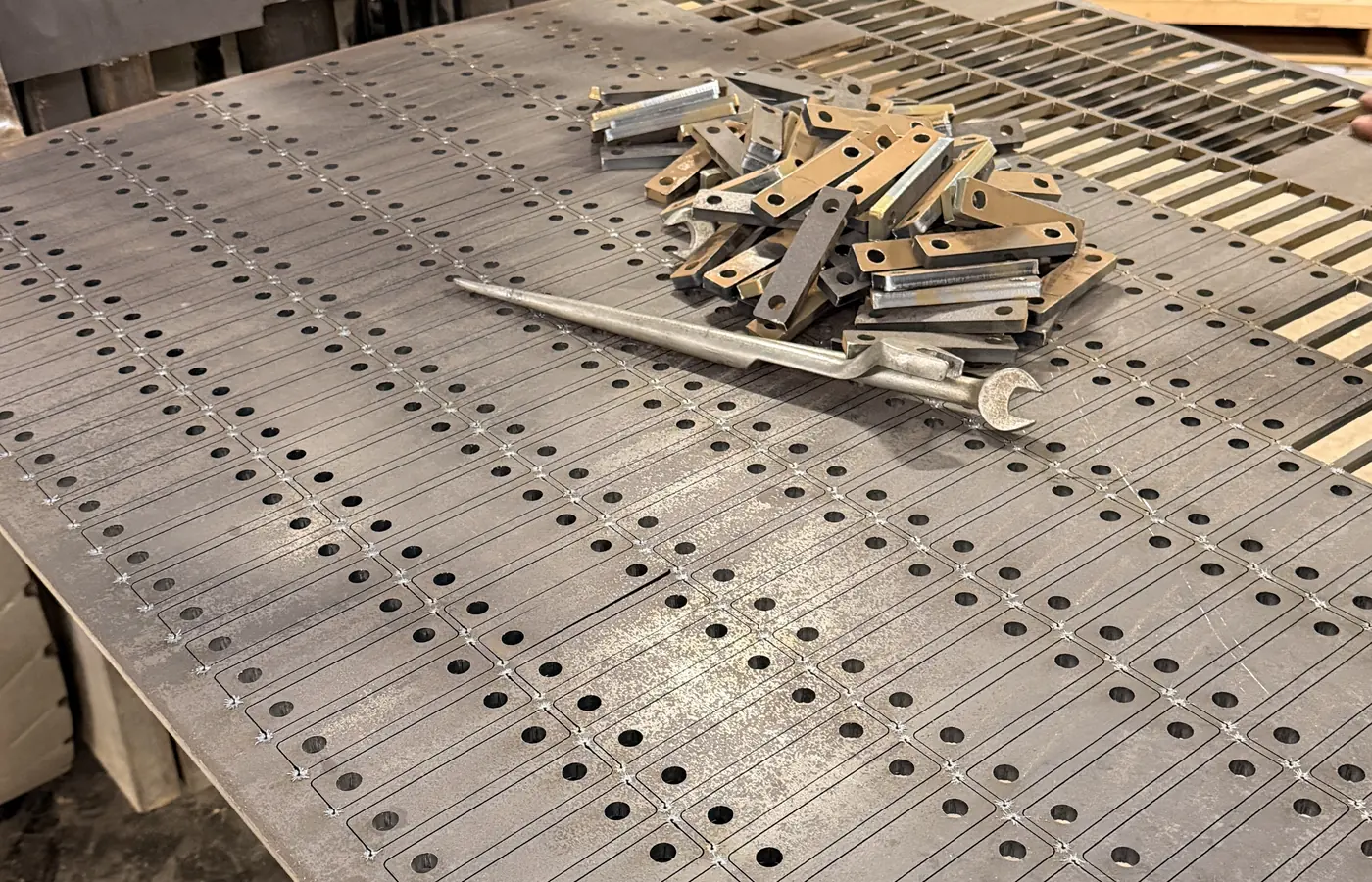
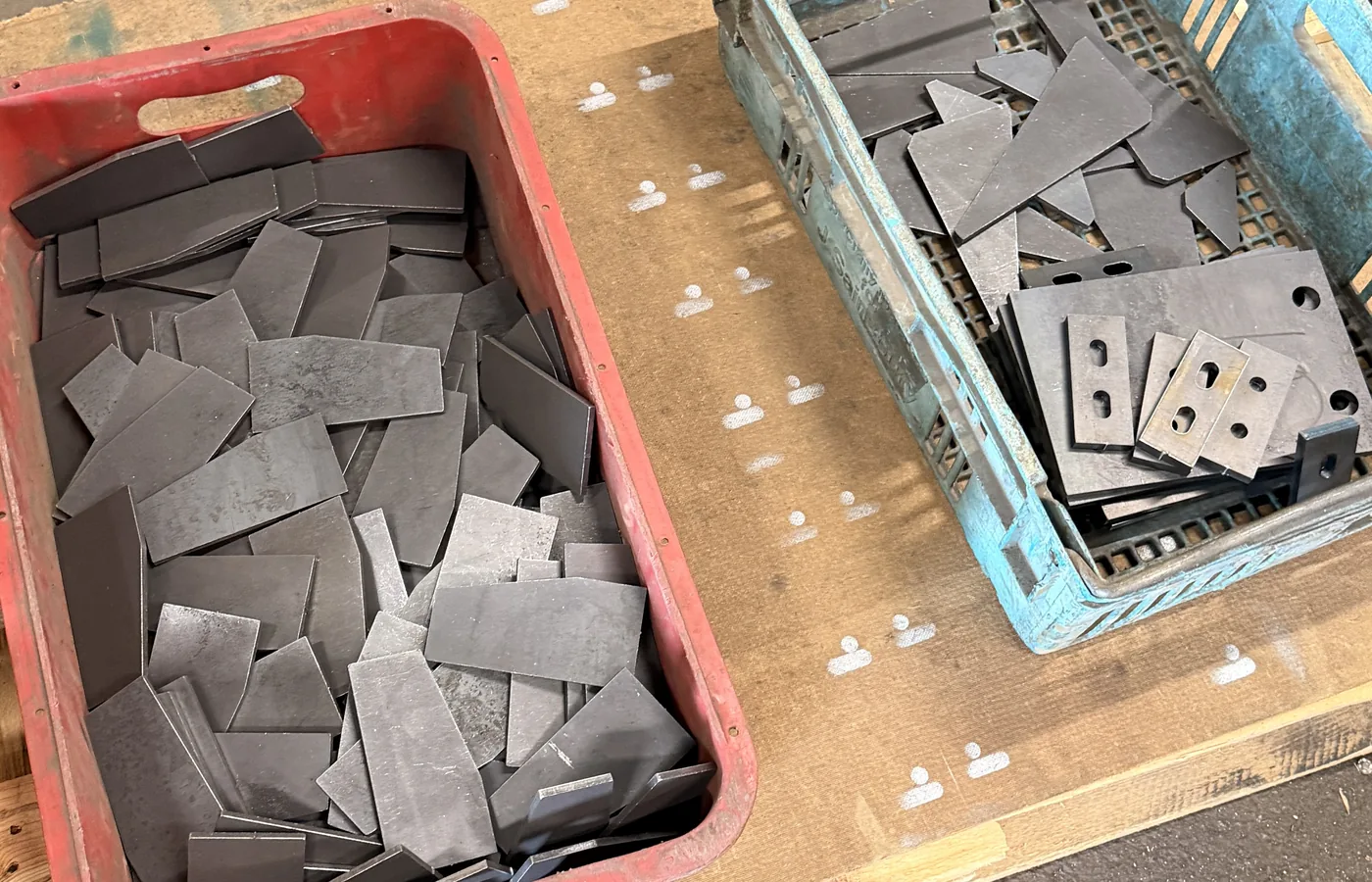
This can be particularly useful where an assembly contains many unique components. Instead of manually cutting tabs, gussets and plates in the fabrication bay, the parts can be programmed as a coordinated laser package. The fabrication team then receives repeatable components that correspond to the released drawing set.
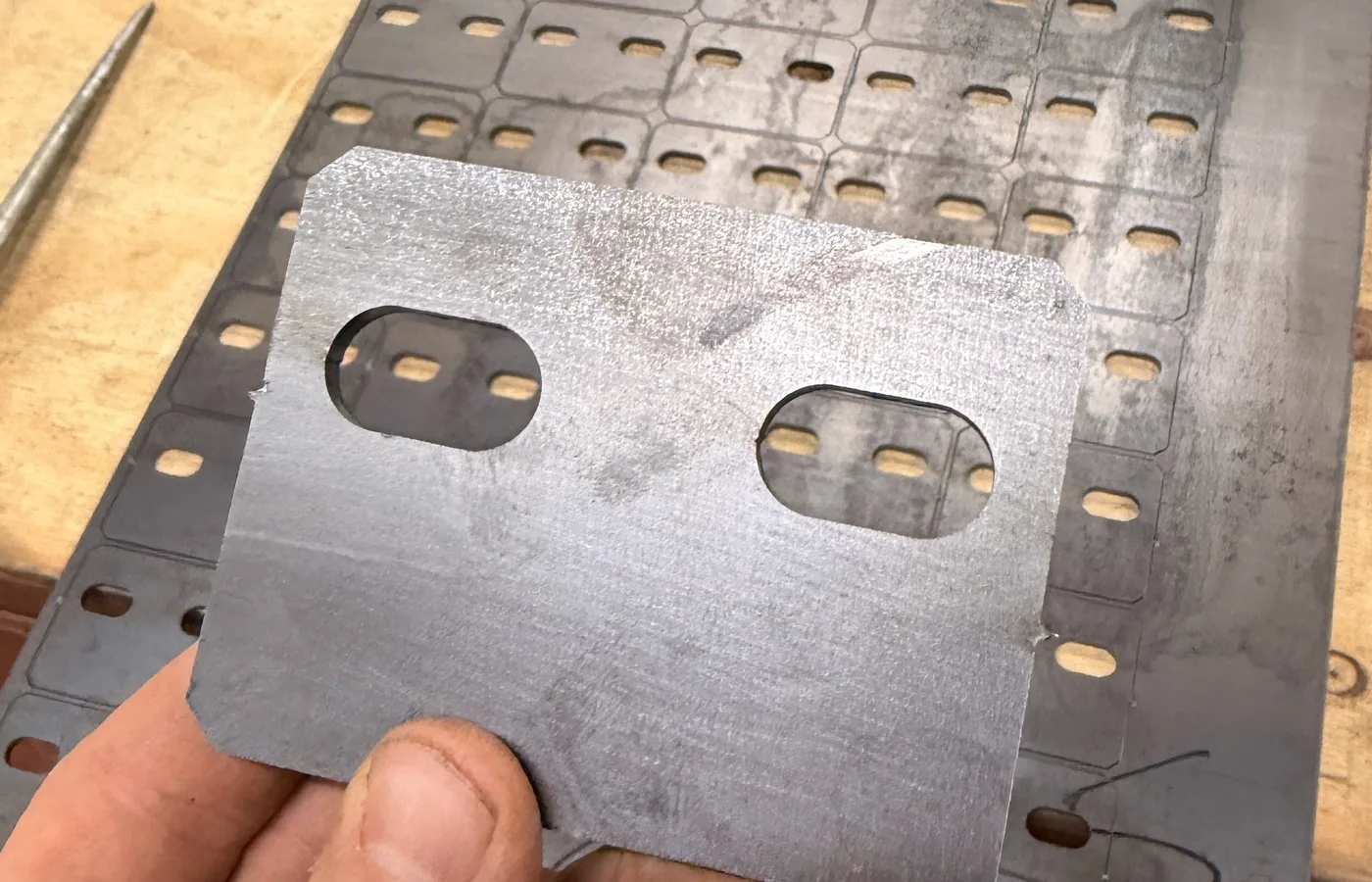
It can also reduce time spent marking out. Holes, slots and shaped edges are produced from digital geometry, allowing the fabricator to focus on fit-up and welding rather than manually creating every feature.
The approach does not remove the need for skilled fabrication. Weld sequence, distortion, access, tolerances and assembly order still need to be considered. Laser cutting and fabrication simply gives the fabrication team a more controlled starting point.
Laser Cutting and Fabrication in Mild Steel, Stainless Steel & Aluminium
Our core laser cutting and fabrication materials are mild steel, stainless steel and aluminium. The correct grade, thickness and fabrication route should be stated on the drawing and enquiry.
Mild Steel
Common for frames, machine parts, guards, supports and general fabricated assemblies. Mild steel is well suited to many welded and folded industrial components.
Stainless Steel
Used where corrosion resistance, hygiene or appearance matters. Suitable work can combine fibre laser cutting, folding and TIG welding.
Aluminium
Useful for lightweight panels, covers, brackets and fabricated components. Alloy, thickness and welding requirements should be defined before quotation.
For current laser thickness capability, see our main fibre laser cutting page.
Laser Cutting and Fabrication for Industrial Buyers
The complete route is particularly valuable to buyers who need manufactured parts ready for installation, assembly or resale rather than loose sheet-metal profiles.
Machinery & Automation
Machine guards, frames, brackets, access panels and welded subassemblies for production equipment and automated systems.
OEM Manufacturing
Repeat laser cutting and fabrication for finished or semi-finished components used within a customer's own product range.
HVAC & Building Services
Plant supports, equipment frames, mounting brackets and sheet-metal assemblies for mechanical and electrical installations.
Construction & Plant
Guards, frames, brackets, repair components and fabricated steelwork for site equipment and machinery.
Data Centres & Infrastructure
Equipment supports, brackets, panels and fabricated metalwork for infrastructure and plant environments.
General Engineering
Custom one-off and repeat components where buyers need a practical manufacturing partner rather than a cut-only service.
Laser Cutting and Fabrication from Milton Keynes
Wards Welding & Fabrications provides laser cutting and fabrication from our Milton Keynes workshop, supporting customers across Milton Keynes, Bedford, Northampton, Buckingham, Aylesbury, Leighton Buzzard, Towcester and surrounding industrial areas.
Suitable projects can also be supplied to customers across the wider UK. Complete fabricated work often travels further than cut-only profiles because the buyer is selecting a manufacturing capability rather than simply the nearest laser machine.
If your job involves several processes, send the complete drawing pack rather than only the laser profiles. That allows us to review folding, welding, machining, fabrication and assembly requirements together and identify whether the whole job fits Wards.
What to Send for a Laser Cutting and Fabrication Quote
The best laser cutting and fabrication quote starts with the complete manufacturing requirement, not only the flat profiles.
1. Assembly Drawing
Send the finished assembly drawing so we can understand how every cut part is used and what the completed fabrication should look like.
2. DXF Files
Provide clean DXF profiles for laser-cut components where available, with part numbers that match the drawing pack.
3. STEP or 3D Model
A 3D model can help communicate folded geometry, weld positions and the relationship between parts, particularly on more complex assemblies.
4. Material & Thickness
State the grade and thickness for every component. Identify any certification, traceability or finish requirements before quotation.
5. Quantity
Tell us whether the work is a one-off fabrication, prototype, project batch or recurring production assembly.
6. Finishing & Delivery
Include finishing, assembly, packaging, collection or delivery requirements so the commercial scope matches what you actually need to buy.
Best enquiry package
Assembly drawing + DXFs + STEP + materials + quantities + finish + required date
Use our quote page or email sales@wards-welding.com.
Why Choose Wards for Laser Cutting and Fabrication?
A supplier offering multiple manufacturing processes can reduce purchasing complexity while keeping technical responsibility closer to the work.
Real In-House Laser
Our 6kW Photon HD gives Wards direct control over the first profiling stage instead of buying cut parts externally for every fabrication.
Fabrication Is Core to Wards
We are not a cutting business trying to add fabrication afterward. Welding and fabrication are established parts of the workshop.
Connected Folding
Laser cutting and fabrication can include our folding service for suitable brackets, panels, channels and formed blanks.
Machining Capability
Where a fabricated part needs drilled, milled, turned or machined features, our machining capability may form part of the route.
Prototype to Repeat
Wards can review a first-off assembly and later repeat production rather than forcing buyers to find a new supplier once quantities increase.
One Point of Contact
Buyers can discuss the complete component with one manufacturing team instead of managing separate cutting, folding and welding companies.
Why Complete Fabrication Can Be Better Than Buying Flat Parts
Buying only flat laser-cut parts makes sense when the customer already has suitable folding and welding capacity. But if the blanks are immediately sent to another subcontractor, the purchasing process can become fragmented. Each handoff adds transport, booking-in, paperwork and another point where technical responsibility can become unclear.
With laser cutting and fabrication under one roof, the supplier can see the final objective. A cut feature that creates a problem during folding can be identified internally. A weld access issue can be discussed before a full batch is cut. A machined detail can be included in the route rather than discovered once the fabrication is almost complete.
This approach can also simplify purchasing. One purchase order may cover a complete manufactured component instead of separate orders for profiles, forming, welding and machining. For repeat parts, reducing administrative handoffs can be just as valuable as reducing physical transport.
Quality responsibility is clearer too. When one supplier is responsible for the finished fabricated item, the customer does not have to decide whether a dimensional issue originated at the laser cutter, folder or welding subcontractor before asking for it to be resolved.
The best route still depends on the job. Some customers genuinely only need flat profiles, and Wards is happy to quote cutting alone. The value of laser cutting and fabrication is having the option to buy more complete work when that makes the overall supply chain simpler.
How to Buy Complete Fabricated Parts More Efficiently
When a purchasing team asks several suppliers to quote individual operations, it can be difficult to compare the true cost of the finished component. A low cutting price may look attractive, but the buyer still has to arrange folding, welding, transport, handling and potentially rework if information is interpreted differently between suppliers.
A better comparison starts with the condition in which the part is actually required. If the assembly line needs a welded bracket ready for installation, ask suppliers to quote that finished condition as well as the cut-only option. This makes it easier to compare the total route rather than one isolated operation.
For laser cutting and fabrication, the drawing pack should separate critical requirements from general notes. Identify dimensions that affect fit, assembly or function, and make sure the revision status is clear on every component. If a fabrication uses multiple parts, a bill of materials can help connect the individual profiles to the complete assembly.
Buyers should also state whether finishing is included. Powder coating, plating, passivation, painting or other finishes may be completed externally depending on the job, but the requirement still needs to be known at quotation stage because it affects handling, masking, tolerances and delivery planning.
Packaging deserves the same attention on repeat work. A robust welded frame may only need sensible transport protection, while finished stainless panels or customer-facing components may require greater care. The correct packaging requirement should be agreed before production rather than discovered when the parts are ready to leave.
Where annual demand is known, share it together with the realistic first order. A first batch may prove the process before the job becomes recurring work. Once the design, manufacturing route and quality expectations are established, repeat orders can be managed against the controlled drawing and current revision.
The commercial advantage of combined manufacturing is therefore not simply having more machines in one building. It is reducing the number of separate purchasing decisions needed to turn raw sheet into the finished item your business actually uses.
Our Six-Step Laser Cutting and Fabrication Process
Complete Drawing Pack
Send assembly drawings, DXFs, 3D models, materials, quantities and required date.
Manufacturing Route
We review the laser cutting and fabrication requirement across cutting, folding, welding and any additional processes.
Complete Scope
The quotation identifies the agreed manufacturing operations and supplied condition.
Cutting & Preparation
Approved profiles are programmed, nested and released with the correct drawing revision.
Fold, Weld & Machine
Parts move through the required in-house operations to create the final component or assembly.
Inspect & Supply
The completed work is checked and prepared for collection, delivery or repeat supply.
Laser Cutting and Fabrication FAQs
What is laser cutting and fabrication?
Laser cutting and fabrication combines laser profiling with further manufacturing processes such as folding, welding, machining and assembly to create a more complete metal component.
Can Wards supply finished fabricated parts?
Yes, where the job suits our capability. We can review complete brackets, guards, frames, supports, panels and welded assemblies rather than only supplying flat laser-cut profiles.
Can you fold parts before welding?
Yes. Suitable laser-cut blanks can continue into our press brake folding service before welding and fabrication.
Can you machine fabricated components?
Potentially, yes. Wards has CNC and manual machining capability that can be incorporated where the geometry and manufacturing route suit our equipment.
What materials can you fabricate?
Our core laser cutting and fabrication materials include mild steel, stainless steel and aluminium, subject to grade, thickness and job requirements.
What drawings should I send?
Send the complete assembly drawing, individual part drawings, DXF files and a STEP or 3D model where available. Include revisions, materials, quantities and finish requirements.
Can you make one-off fabrications?
Yes, subject to suitability. Wards can review one-off, prototype and project work as well as repeat production assemblies.
Can you produce repeat fabricated parts?
Yes. Controlled assemblies can be reviewed for recurring laser cutting and fabrication work where drawings, revisions and commercial requirements are suitable.
Do you offer cutting only?
Yes. Customers can still use Wards for laser cutting alone if they prefer to handle folding, welding or assembly internally.
Where is Wards based?
Wards Welding & Fabrications operates from Milton Keynes and supports suitable fabrication work locally and across the wider UK.
Need Laser Cutting and Fabrication?
Send Wards your assembly drawings, DXFs, material specifications and quantities. We can quote laser cutting and fabrication as one complete route, from flat sheet through folding, welding, machining and finished metalwork.