

Production Laser Cutting for Repeat Parts & Batch Manufacturing
Production laser cutting from Wards is built for manufacturers, OEMs, fabricators and engineering teams that need repeat quantities rather than a single one-off profile. We support scheduled batches, recurring component orders, mixed-part nests and laser-cut parts that continue into folding, welding, machining and fabrication.
Production Laser Cutting at a Glance
Production Laser Cutting for Manufacturers Who Need Parts to Keep Coming
Our production laser cutting service is aimed at businesses that need repeat metal parts to arrive in usable quantities, to the correct revision and on an agreed schedule. The work may be fifty brackets every month, hundreds of machine plates, mixed component kits or larger recurring batches tied to an OEM product.
Wards operates a 6kW Esprit Photon HD fibre laser with a 4000 × 2000mm cutting area. That gives us room for repeated parts, mixed nests and larger components while still supporting one-off development pieces that may later become production work.
The important difference with production laser cutting is that the commercial requirement is broader than simply cutting a DXF once. Part numbering, revision status, repeat quantity, material specification, delivery pattern and downstream operations all become more important when the same component returns again and again.
For this reason, we encourage buyers to tell us whether an enquiry is expected to become repeat work. That lets us review the component as an ongoing supply requirement rather than treating every order as an unrelated one-off.
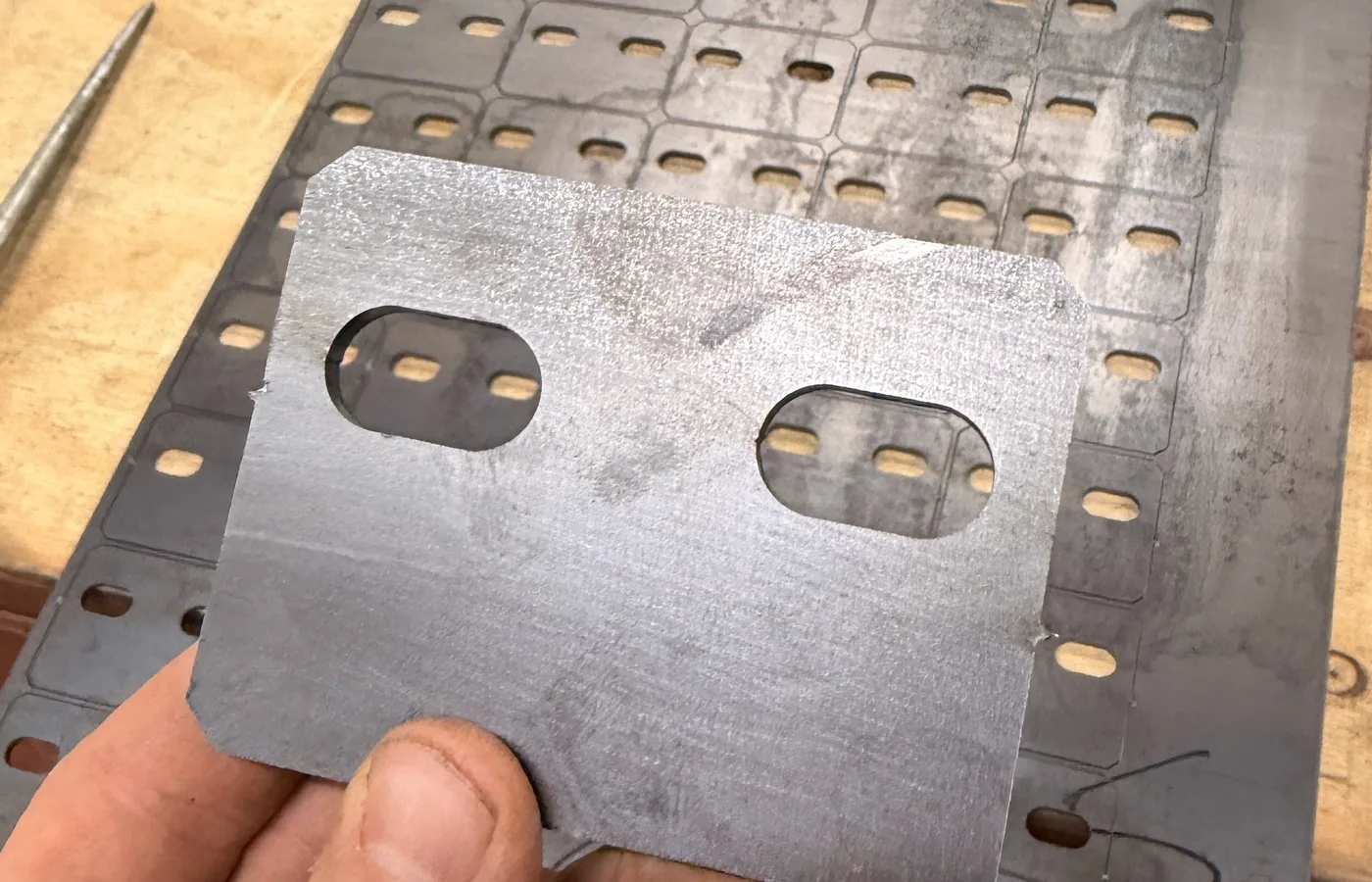
Six Ways We Support Production Laser Cutting
Batch work can take several forms. Our production laser cutting service is designed around the way the parts are bought and used, not just the number of profiles on the sheet.
Repeat Batches
Recurring quantities of approved parts can be programmed and supplied against new purchase orders, subject to revision and material confirmation.
Scheduled Supply
Where demand is predictable, production laser cutting can support agreed batch sizes and delivery patterns rather than one large order that ties up stock unnecessarily.
Mixed-Part Nests
Assemblies often contain several different plates, brackets, tabs and gussets. Suitable parts can be grouped into coordinated cutting plans to support complete kits.
Cut & Fold Production
Repeat laser-cut blanks can continue into folding so buyers receive formed brackets, trays, channels and panels instead of flat parts.
Complete Fabricated Parts
Production laser cutting can be combined with welding, machining and fabrication where the recurring requirement is a finished component or subassembly.
Overflow Manufacturing
Wards can also support established manufacturers when internal cutting capacity is full or a current supplier cannot cover a temporary increase in demand.
What We Manufacture in Production Batches
The strongest production laser cutting opportunities are repeatable engineering parts with controlled geometry and a known commercial requirement.
Brackets
Mounting, support and equipment brackets produced in repeat quantities for machinery, HVAC, automation, frames and general engineering.
Plates & Panels
Machine plates, access panels, base plates, end plates and equipment panels with consistent hole patterns, slots and external geometry.
Gussets, Tabs & Lugs
Small repeat fabrication parts that can be nested efficiently and supplied as grouped sets for frames, weldments and assemblies.
Guards & Covers
Repeated flat or formed sheet metal guards with cut-outs, ventilation, fixing features and edges ready for further processing.
Fabrication Kits
Production laser cutting can supply the full profile set for one welded assembly, helping reduce manual marking and preparation in the fabrication bay.
OEM Components
Controlled parts used in a customer's finished product, where repeatability, revision control and dependable supply are more important than one-off speed.
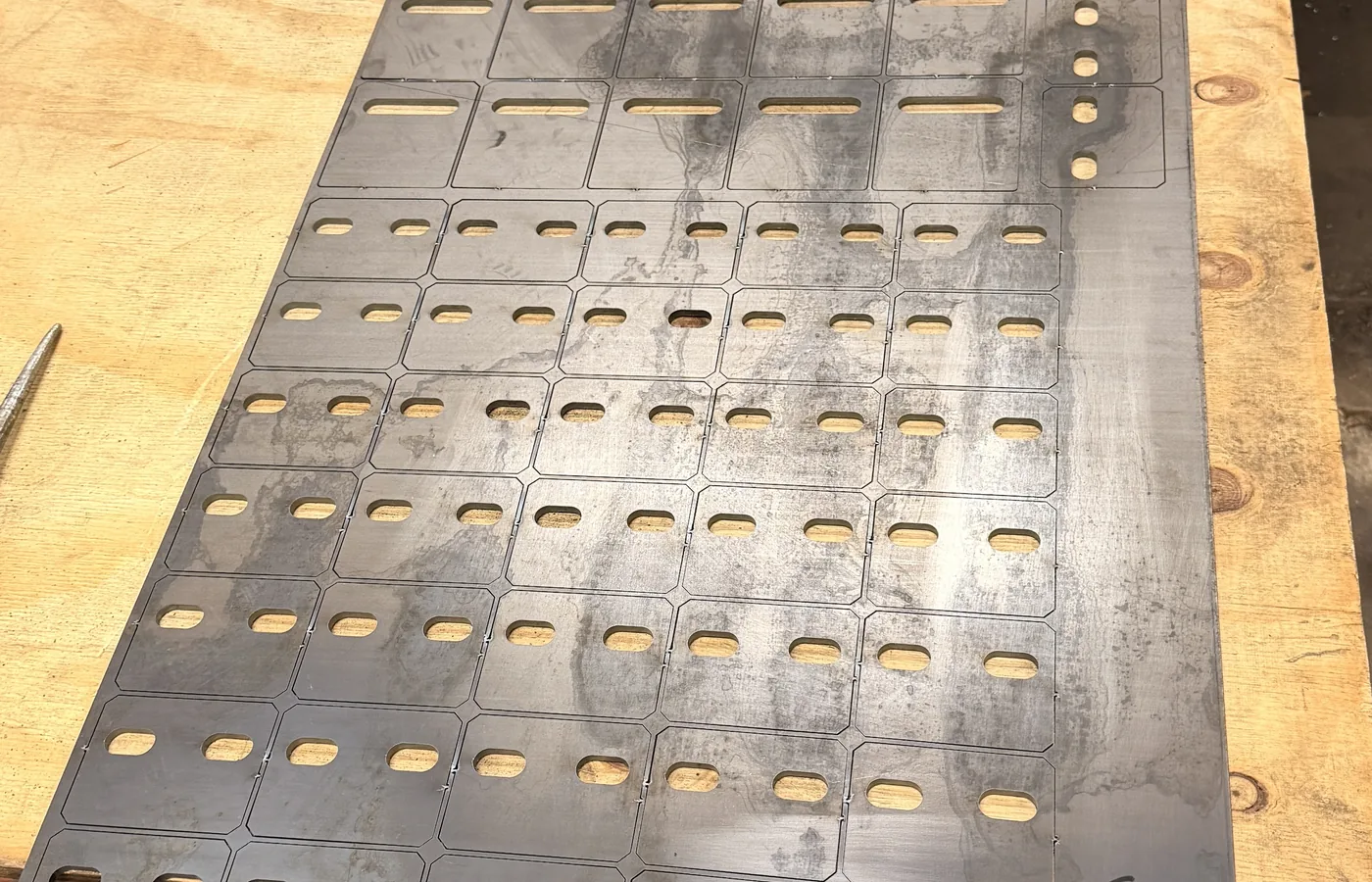
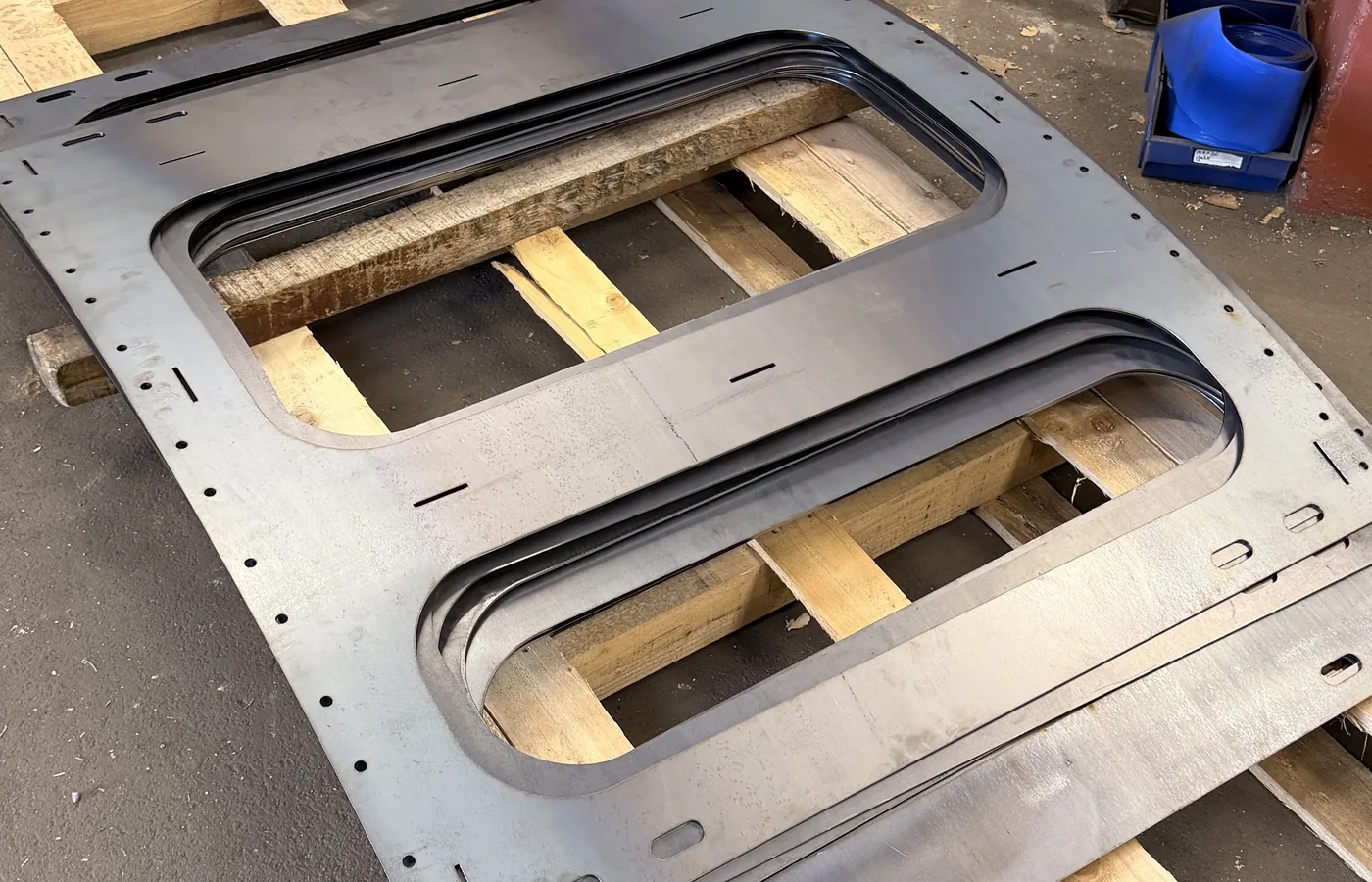
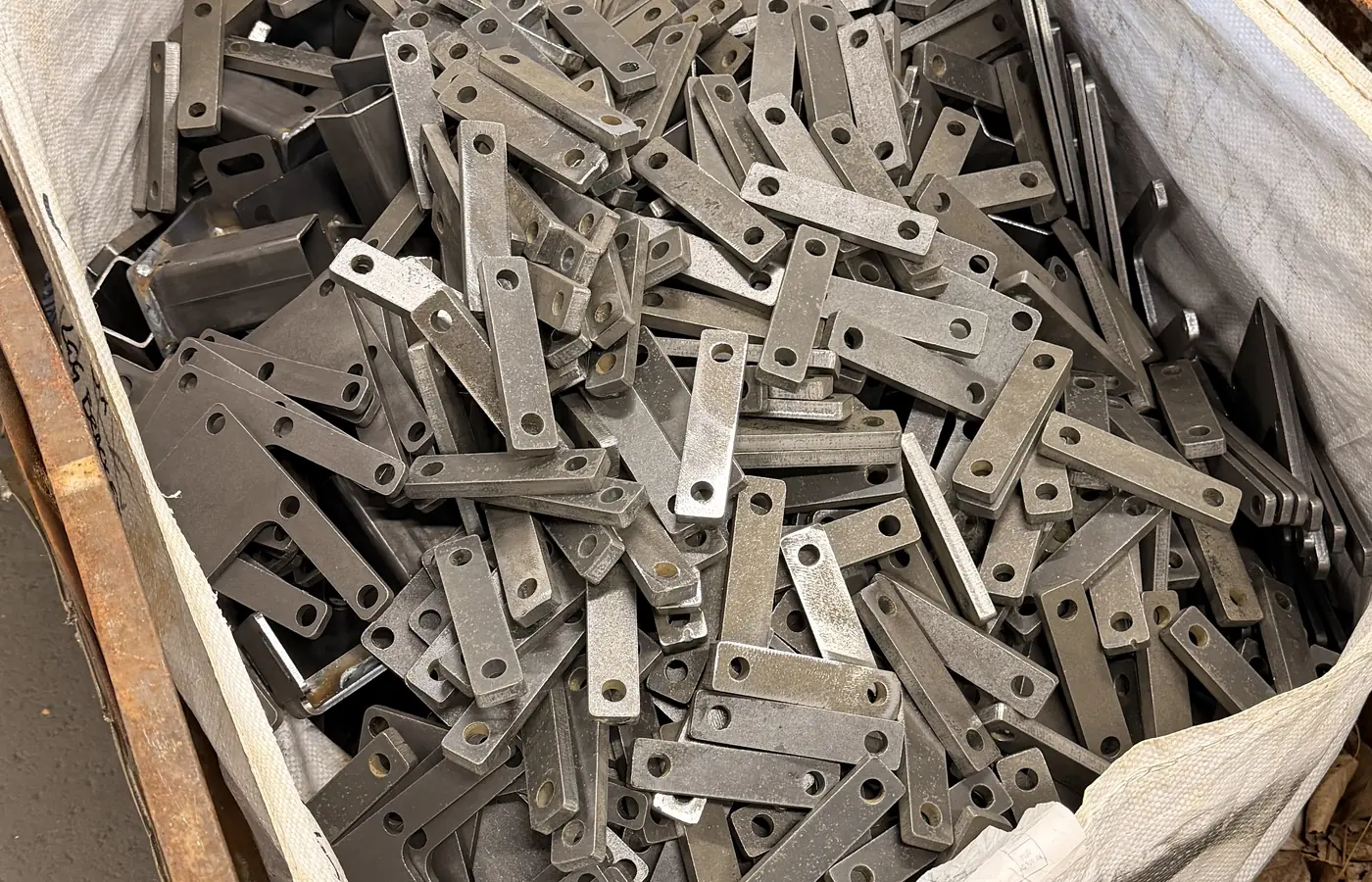
Production Laser Cutting Needs More Than a Saved DXF
Repeat manufacture only works when the correct information returns with every order. A saved file is useful, but it should never replace controlled revision information. If a customer updates a bracket, changes material thickness or alters a hole pattern, the purchasing and drawing references need to show which version is now current.
For production laser cutting, Wards therefore treats part numbers and revisions as important manufacturing information. If an older programme exists but the new purchase order references a later revision, the latest released drawing should be supplied before manufacture.
Forecast quantities are also valuable. A forecast is not the same as a purchase order, but it tells us whether the expected demand is ten parts occasionally or several hundred every month. That context can influence material planning, nesting and how the production route is discussed.
Some customers prefer larger batches to reduce ordering frequency. Others want smaller scheduled releases to avoid holding excess stock. Production laser cutting can support either model where it fits capacity and material availability. The right approach depends on component value, storage space, demand stability and downstream assembly requirements.
If parts require folding or welding, the whole route should be considered as repeat work too. There is little benefit in making the cutting stage consistent if the next operation changes every order. Where Wards supplies the complete component, we can review the recurring process as one manufacturing package.
Production Laser Cutting in Mild Steel, Stainless Steel & Aluminium
Our core production laser cutting materials are mild steel, stainless steel and aluminium. Exact grade and thickness must be identified on repeat jobs so every order is quoted and manufactured against the correct specification.
Mild Steel
Common for brackets, plates, frame components, guards and general fabricated parts where strength, weldability and cost are important.
Stainless Steel
Used for corrosion-resistant panels, guards, equipment components and repeat parts that may continue into folding or TIG welding.
Aluminium
Suitable for lightweight panels, covers, brackets and OEM components. Alloy, thickness and finish requirements should be controlled from the first production order.
For current machine-specific thickness capability, see our main fibre laser cutting page.
Production Laser Cutting for OEMs, Fabricators & Engineering Businesses
Repeat sheet metal parts are needed across almost every industrial sector. Wards focuses on buyers who need dependable manufacturing support rather than occasional decorative cutting.
OEM Manufacturing
Recurring component sets for machines, products and equipment where the same released parts are ordered repeatedly.
Machinery & Automation
Mounting plates, brackets, guards, panels and subassembly parts used across production equipment and automated systems.
HVAC & Building Services
Repeat supports, equipment plates, brackets and formed components tied to standard product ranges or project demand.
Fabrication Companies
Production laser cutting can provide ongoing cutting capacity while the customer's own workshop retains welding and assembly.
Construction & Plant
Recurring guards, plates, supports and replacement parts for site equipment, plant and fabricated systems.
General Engineering
Any controlled repeat part can be considered where quantities, materials and geometry suit our manufacturing capability.
Production Laser Cutting from Milton Keynes to the Wider UK
Wards Welding & Fabrications provides production laser cutting from our Milton Keynes workshop. We support businesses across Milton Keynes, Bedford, Northampton, Buckingham, Aylesbury, Leighton Buzzard, Towcester and surrounding industrial areas.
Repeat production is not limited to local buyers. Suitable ongoing and subcontract work can be supplied to customers further across the UK where the delivery model, quantities and complete manufacturing route make commercial sense.
If you are assessing Wards as a second source or new production supplier, send a representative drawing pack together with current and forecast quantities. That gives us a much better understanding of the opportunity than a single sample part with no information about expected demand.
What to Send for a Production Laser Cutting Quote
For production laser cutting, we need both manufacturing data and commercial context. The following information helps us review the job properly.
1. DXF Files
Provide controlled flat geometry for each part, with clear part numbers and no obsolete files mixed into the pack.
2. PDF Drawings
Include revisions, tolerances, material grades, thicknesses, notes and any quality or certification requirements.
3. Batch Quantity
Tell us the quantity required on the first order. Do not only give an annual volume if you actually expect monthly releases.
4. Forecast Demand
Where possible, provide expected repeat frequency or annual demand so we can understand the scale of the production laser cutting requirement.
5. Secondary Operations
Include folding, machining, welding, fabrication, finishing or assembly so we can assess whether Wards should supply the complete component.
6. Delivery Pattern
State whether you need one large delivery, scheduled batches, call-off supply or a different arrangement. This can materially affect production planning.
Best production enquiry package
DXF + PDF + revision + material + thickness + first batch + forecast + operations + required date
Use our quote page or email sales@wards-welding.com.
Why Choose Wards for Production Laser Cutting?
The goal of a production supplier is not merely to cut one batch correctly. The real value is creating a dependable route for repeat parts as demand continues.
6kW Fibre Laser
Our Photon HD provides in-house capacity for repeat sheet metal work across common engineering materials.
4m × 2m Nesting Area
The 4000 × 2000mm cutting area gives our production laser cutting programmers useful space for repeated and mixed-part nests.
Fabrication Knowledge
We understand how laser-cut parts become brackets, frames, guards and complete assemblies because those processes already sit within Wards.
Multiple Processes
Add folding, welding, CNC machining and fabrication where appropriate.
Repeat Supply Mindset
We encourage clear part numbers, revisions and forecast information so ongoing work is managed as production rather than repeated one-off quoting.
Second-Source Potential
Manufacturers can use Wards as an alternative or additional source where supply-chain resilience and extra capacity matter.
How to Make Production Laser Cutting Easier to Buy
The best production relationships usually start with a realistic first order. Rather than asking for an annual volume price with no released demand, give us the quantity you genuinely expect to place first and then share the forecast separately. That allows the quotation to reflect actual purchasing behaviour.
Keep engineering data controlled. If drawings are revised, use clear revision letters or numbers and make sure the purchase order references the same issue. This matters even more with production laser cutting because a saved programme can reproduce the wrong part very consistently if an outdated file is accidentally released.
Group related parts where possible. If an assembly uses twelve different laser-cut items, send the complete set. Seeing the relationship between the profiles may help with nesting, fabrication planning and identifying where folding or welding could be bundled into one order.
Think about packaging and identification too. A hundred identical brackets are simple. A mixed kit of twenty part numbers may need labelling, separation or grouped packing. If your assembly team has a preferred system, tell us before quotation so the requirement is included rather than added at dispatch.
Finally, communicate demand changes early. Production laser cutting is easiest to plan when buyers give suppliers visibility of major increases, project starts or seasonal peaks before the urgent purchase order arrives.
What Buyers Should Check Before Moving Repeat Parts to a New Supplier
Moving a recurring component to a new manufacturing supplier is different from buying a one-off profile. The first batch should be treated as a controlled introduction to the supply route. Drawings, revisions, material requirements, inspection expectations and packaging standards all need to be clear before the job becomes routine.
Start with the drawing pack. Every part should have a clear identifier and current revision. If several files exist for the same component, remove obsolete versions from the pack rather than expecting the supplier to guess which one is live. This is especially important where a component has changed during development.
Next, define what makes the part acceptable. Some components only need profile geometry and overall dimensions checked. Others may have critical hole centres, positional tolerances, flatness requirements or features that affect assembly. If a dimension is important to function, it should be shown on the controlled drawing rather than left as an assumption.
Material should also be defined properly. Grade, thickness and any certificate or traceability requirement should be stated before quotation. If an OEM product depends on a specified grade, changing to a cheaper alternative without engineering approval is not acceptable. A clear material specification protects both the buyer and manufacturer.
Packaging can become surprisingly important once quantities increase. A handful of plates may be easy to identify by eye. A delivery containing several hundred similar brackets across multiple part numbers may need labels, grouped bundles or separated boxes. If your stores or assembly team has a preferred method, include it at the start.
For repeat work, consider how changes will be communicated. A new revision should trigger a clear update rather than relying on an email buried inside an old thread. Purchase orders, drawings and file names should all point to the same released version wherever possible.
Finally, decide whether you are buying flat profiles or finished manufacturing output. If every batch is immediately sent elsewhere for bending, welding or machining, there may be value in asking Wards to quote a broader package. Removing unnecessary supplier handoffs can simplify purchasing, transport and responsibility when a finished component is what the assembly line actually needs.
Our Six-Step Production Laser Cutting Process
Drawing Pack
Send DXFs, PDFs, revisions, materials, first batch quantity and forecast demand.
Production Check
We review the production laser cutting requirement, secondary operations and delivery pattern.
Commercial Route
We quote the released quantity and discuss repeat supply where sufficient information is available.
CAD/CAM & Nesting
Approved parts are programmed around material, quantities and suitable sheet utilisation.
Cut & Process
Parts are laser cut and continue into any agreed folding, welding, machining or fabrication.
Supply & Reorder
Future orders are checked against the current released revision before manufacture.
Production Laser Cutting FAQs
What is production laser cutting?
Production laser cutting is the repeat manufacture of laser-cut parts in controlled batches rather than a single one-off component.
Can Wards manufacture repeat batches?
Yes. We can review recurring quantities, part references, revisions and expected order frequency for suitable repeat work.
What quantities can you quote?
We can review prototypes, low-volume batches and larger repeat requirements. The best quotation is based on the actual first batch plus realistic forecast demand.
Can you schedule regular deliveries?
Potentially, yes. Production laser cutting can support repeat delivery patterns where quantities, capacity, material availability and commercial arrangements are agreed.
Can you fold and weld the parts too?
Yes. Wards can combine repeat laser cutting with folding, MIG or TIG welding, machining and fabrication where suitable.
What materials can you cut?
Our core fibre laser materials are mild steel, stainless steel and aluminium. Exact grade and thickness should be specified on every controlled production drawing.
What files should I send?
DXF is preferred for flat geometry, supported by controlled PDF drawings showing part number, revision, material, thickness, tolerances and notes.
Can you become a second-source supplier?
Potentially. Wards can review production laser cutting as a second-source or overflow route where the technical, quality, commercial and capacity requirements are suitable.
Can you produce mixed fabrication kits?
Yes. Suitable groups of plates, brackets, tabs and gussets can be reviewed together where they belong to the same assembly or production package.
Where is Wards based?
Wards Welding & Fabrications is based near Newport Pagnell, Milton Keynes, and supports suitable repeat work locally and across the wider UK.
Need Production Laser Cutting Capacity?
Send Wards your drawing pack, released batch quantity, material specification and expected repeat demand. We can quote production laser cutting alone or include folding, welding, machining and fabrication as part of a complete recurring manufacturing package.