
Prototype Laser Cutting for One-Off Metal Parts
Prototype laser cutting from Wards is designed for engineers, manufacturers, fabricators and product developers who need one-off or low-volume metal parts made from drawings quickly and accurately. We can cut development brackets, first-off components, replacement profiles, test pieces and pre-production parts, then add folding, welding, machining or fabrication where the job needs more than a flat blank.
Prototype Laser Cutting at a Glance
Prototype Laser Cutting Without Production Tooling
Prototype laser cutting gives designers and engineers a practical way to turn a CAD file into a real metal component without investing in dedicated blanking tools, punches or dies for the first part. That makes it useful for development work where geometry may still change after testing.
Wards uses a 6kW Esprit Photon HD fibre laser with a 4000 × 2000mm cutting area. We can review one-off components, small prototype batches and development sets in mild steel, stainless steel and aluminium, subject to material specification and machine capability.
The first part is often only the start. A prototype bracket may need folding, a panel may need welding into a frame, or a development plate may need machined features after cutting. Our prototype laser cutting service can be connected to other Wards processes so you can test something closer to the finished component rather than only a flat profile.
If the design later moves into repeat production, the same component can be reviewed again for batch manufacture. This gives engineers a route from first-off development into controlled ongoing supply without automatically changing suppliers.
Six Reasons to Use Prototype Laser Cutting
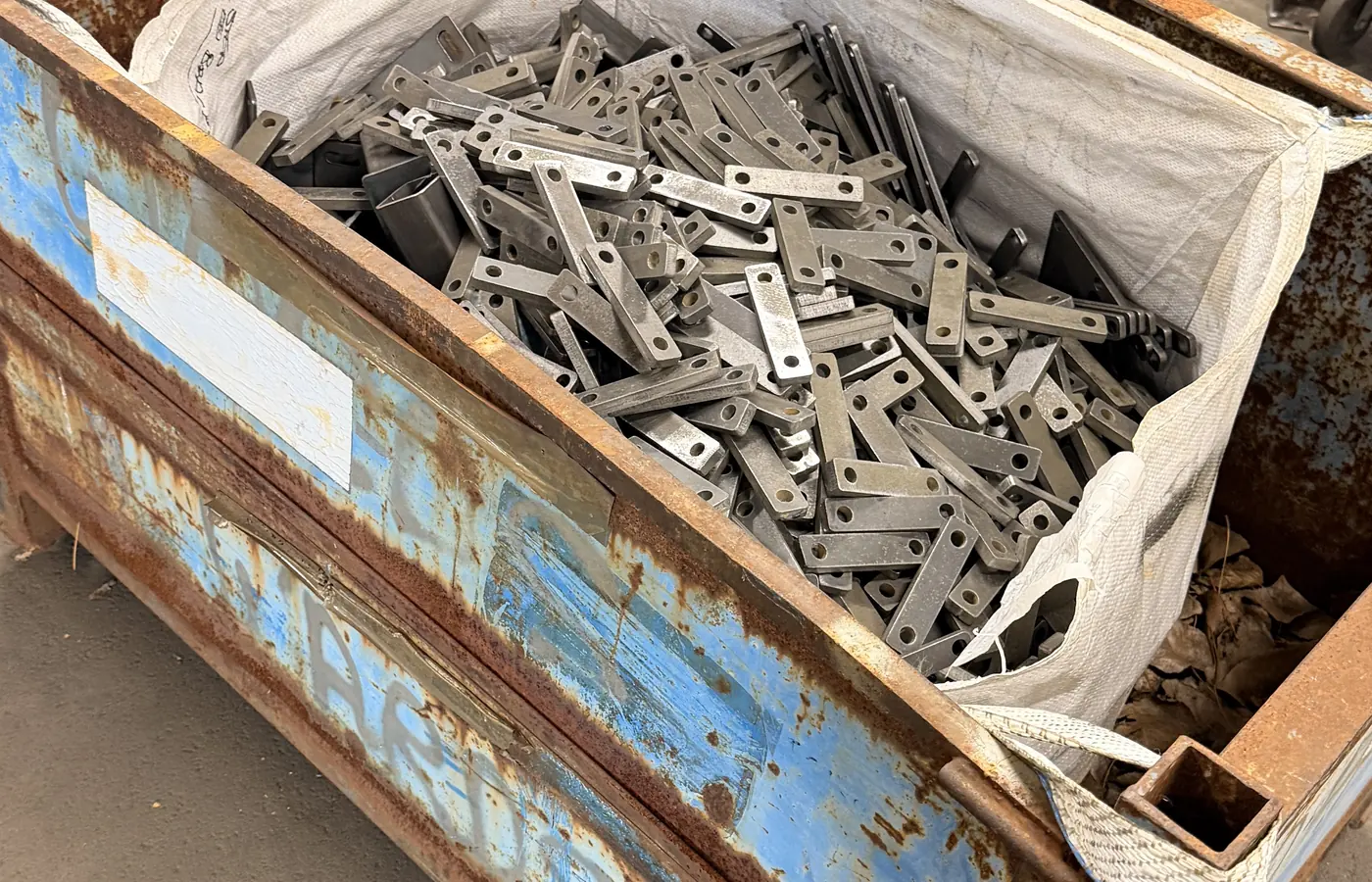
Early-stage manufacturing has different priorities from full production. Our prototype laser cutting service focuses on getting real parts into your hands so geometry, fit and function can be checked before higher quantities are released.
Single Parts
Need one bracket, plate, guard or profile rather than a batch? One-off parts can be reviewed where the geometry, material and commercial requirements suit the process.
Small Prototype Batches
Prototype laser cutting can also support small sets of parts for testing, pilot builds or several development assemblies before the design is released for production.
Design Revisions
Because the profile is driven from digital geometry, changes can often be made by updating the controlled CAD and drawing files rather than modifying dedicated blanking tooling.
Replacement Profiles
Where a suitable drawing or measured geometry exists, one-off replacement plates, covers, brackets and flat profiles can be reviewed for maintenance and repair work.
Cut & Fold Prototypes
Suitable blanks can move from prototype laser cutting into folding so you can test the actual formed bracket, panel, tray or channel rather than only the flat pattern.
Prototype to Production
Once the part is approved, Wards can review repeat quantities, production nesting and ongoing supply rather than forcing the project to restart with another manufacturer.
What We Make with Prototype Laser Cutting
The process is especially useful for practical engineering parts where a designer needs to verify geometry, fit, access or assembly before committing to a larger batch.
Development Brackets
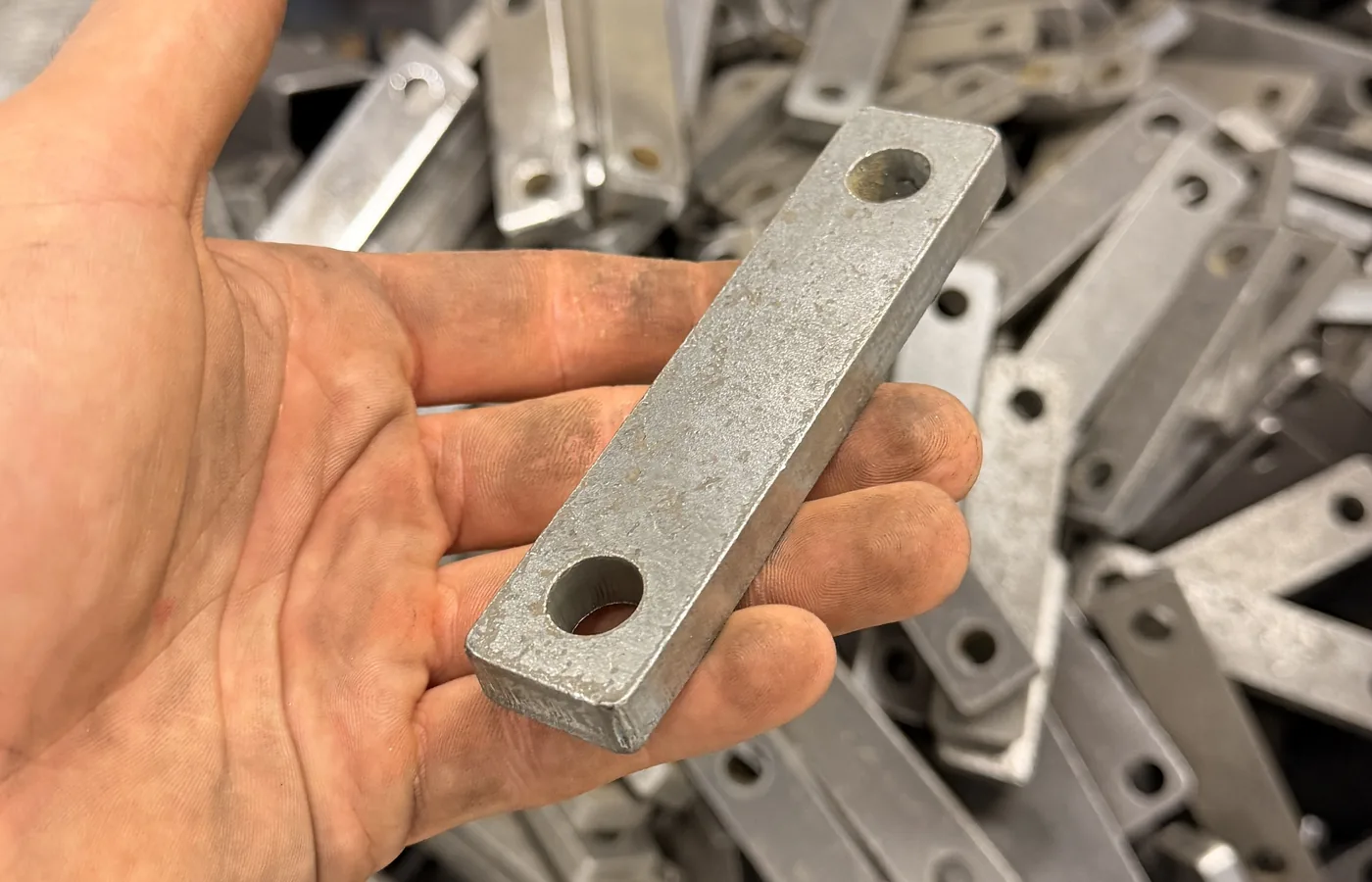
Mounting brackets, supports, tabs and fixtures for machinery, products and test assemblies where hole positions or flange lengths may still change.
Machine Panels
Prototype guards, access panels and covers with cut-outs, slots and fixing patterns ready for fit checks or later folding.
Base & Mounting Plates
One-off plates used to verify machine layouts, equipment positions, bolt patterns and assembly interfaces before repeat manufacture.
Test Fixtures & Jigs
Prototype laser cutting can support workshop jigs, gauges, templates and fixture plates used during development or production trials.
Replacement Components
Flat profiles for maintenance, obsolete machinery and repair work where an original component is no longer easily available but usable geometry can be produced.
Pre-Production Sets
Small component sets for pilot assemblies and customer approval before the design is frozen and larger production quantities are ordered.
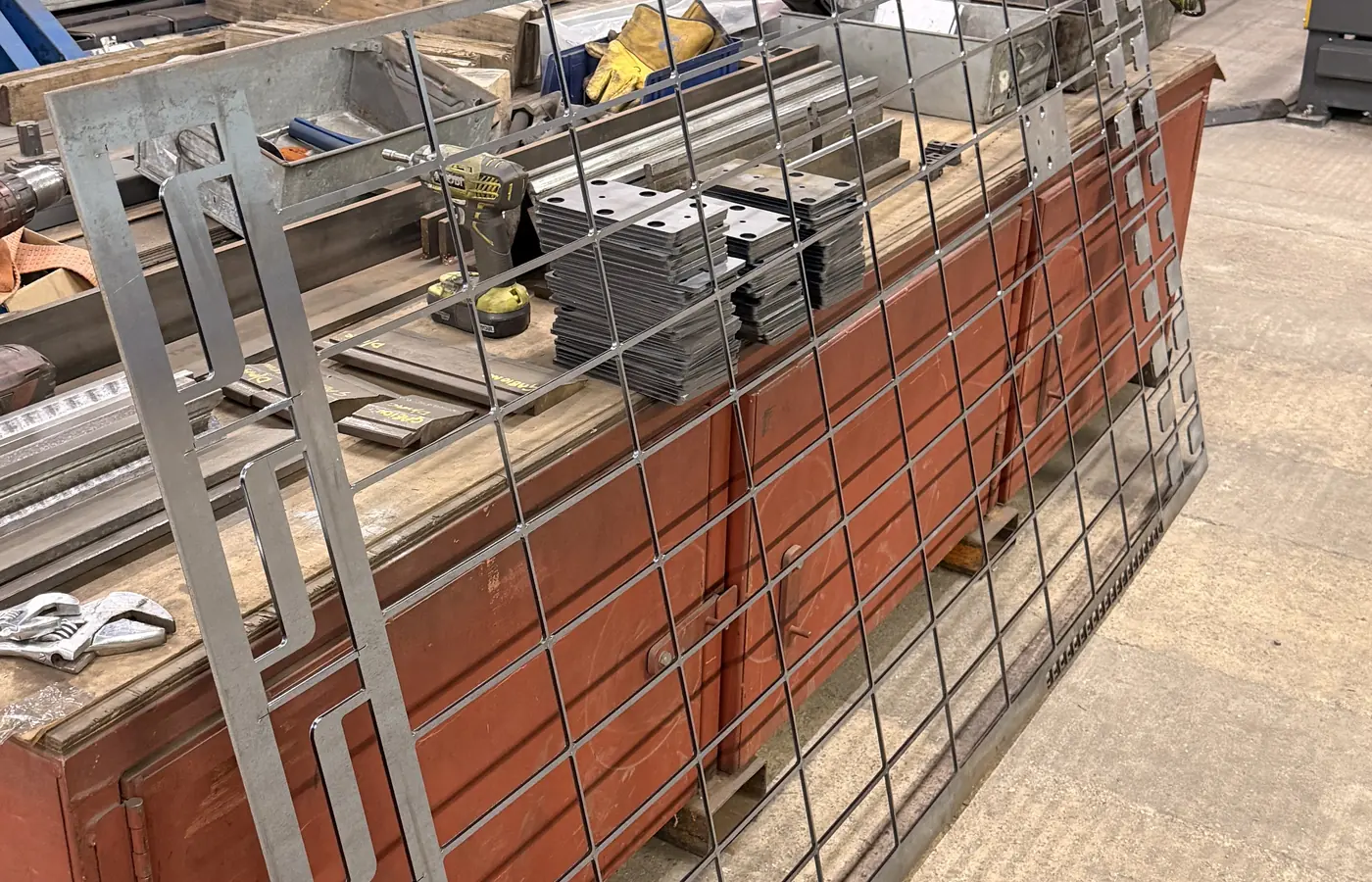
Prototype Laser Cutting as Part of Product Development
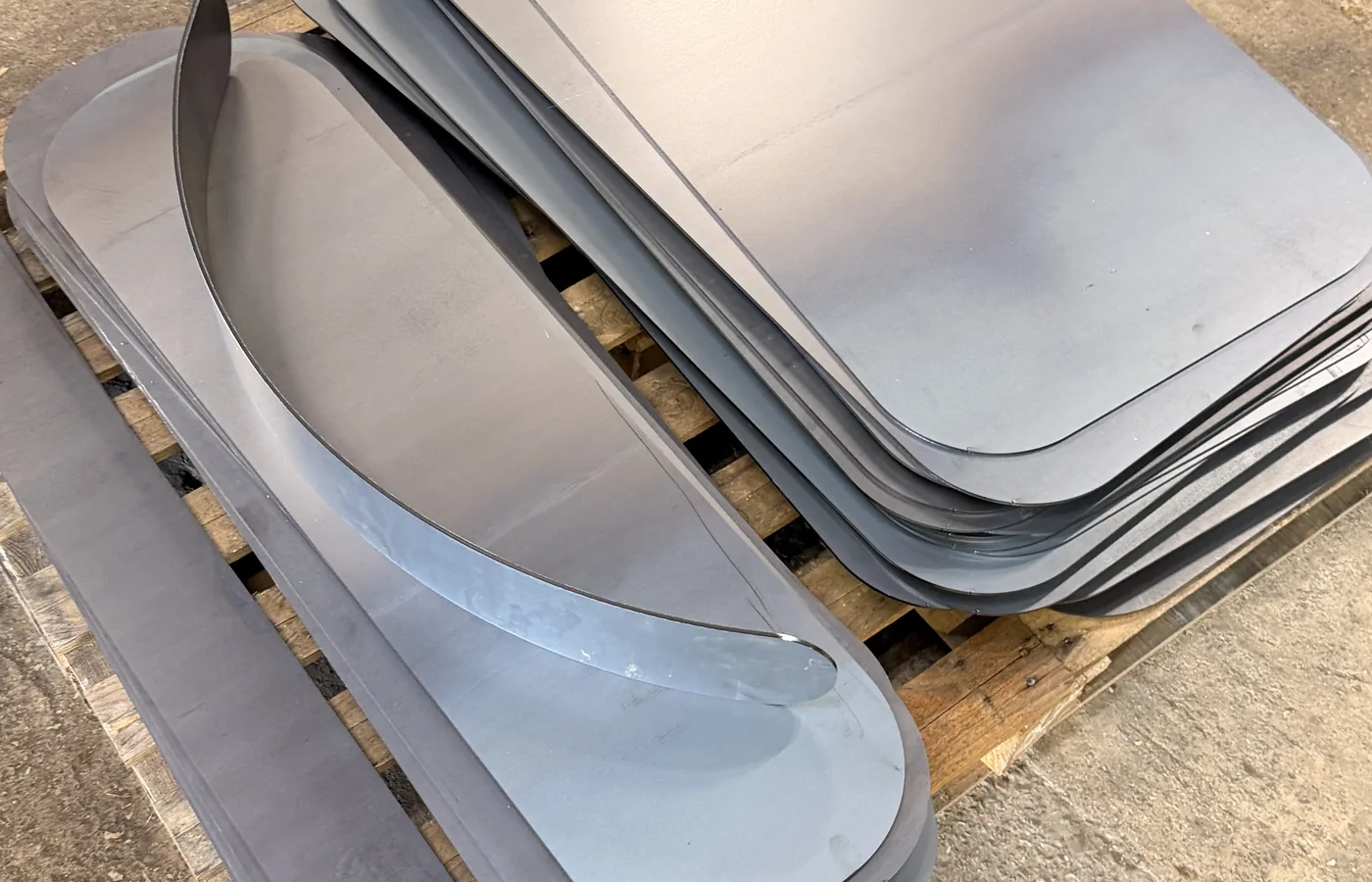
The biggest advantage of prototype laser cutting is speed of design iteration compared with manufacturing routes that depend on dedicated tooling. When a component changes, the digital model and drawing can be revised and the new profile reviewed without waiting for a new die or blanking tool.
That does not mean every design should be cut immediately. A prototype still benefits from a manufacturing review. Very small holes, narrow slots, fragile tabs, sharp internal corners and features close to bend zones can make a design harder to manufacture or less useful once the part reaches the next operation.
If the part will be folded, send the formed 3D model as well as the flat geometry. A flat DXF tells us what to cut, but the model explains what the finished component is meant to become. For prototype laser cutting that will continue into fabrication, an assembly drawing is even more useful because it shows how the part interacts with everything around it.
After the first part is made, test fit and function before releasing a larger quantity. If something changes, update the drawing revision clearly and remove obsolete files from the next enquiry. This avoids a common prototype problem where several similar versions of the same part exist and nobody is certain which one is current.
When the design is ready for production, tell us. The manufacturing priorities may change once quantity increases. Nesting, batch size, material purchasing, packaging and repeat supply become more important than they were for the initial one-off.
Prototype Laser Cutting in Mild Steel, Stainless Steel & Aluminium
Our core prototype laser cutting materials are mild steel, stainless steel and aluminium. The correct grade and thickness matter even at prototype stage because material choice affects weight, stiffness, forming and welding behaviour.
Mild Steel
Useful for development brackets, machine parts, fixtures, plates and general fabricated prototypes where strength, cost and weldability are important.
Stainless Steel
Suitable for development work where corrosion resistance, appearance, hygiene or the final production material needs to be validated before release.
Aluminium
Common for lightweight panels, covers, brackets and product-development parts. Alloy and thickness should match the intended design wherever possible.
For current machine-specific cutting thickness capability, see our main fibre laser cutting page.
Prototype Laser Cutting for Engineers, Designers & Manufacturers
One-off metal parts appear across almost every technical industry. Wards focuses on practical prototype work that can move toward real manufacturing rather than purely decorative cutting.
Machinery Development
Trial brackets, guards, plates, fixtures and machine modifications used during new equipment development and commissioning.
OEM Product Development
Prototype laser cutting for early product builds, design validation and pre-production metal components before recurring manufacture.
Automation & Robotics
Sensor brackets, mounting plates, covers and interface components needed during cell build, integration and testing.
Fabrication Development
First-off gussets, plates, tabs and brackets used to prove a fabricated frame or assembly before multiple units are built.
Maintenance & Repair
One-off replacement profiles and custom repair plates where equipment cannot justify a full production tooling route.
R&D & Engineering Teams
Physical metal parts for test rigs, experiments, validation work, fixtures and development projects where designs change as learning progresses.
Prototype Laser Cutting from Milton Keynes
Wards Welding & Fabrications provides prototype laser cutting from our Milton Keynes workshop, supporting customers across Milton Keynes, Bedford, Northampton, Buckingham, Aylesbury, Leighton Buzzard, Towcester and surrounding industrial areas.
Development work can also be supplied to customers further across the UK where the part and delivery requirements make sense. For prototypes, good technical communication is usually more important than simply finding the geographically closest machine.
If the job is genuinely urgent, state the required date in the first enquiry. Prototype and breakdown work can be time sensitive, but realistic scheduling still depends on material availability, current workshop load and whether the part needs secondary operations after cutting.
What to Send for a Prototype Laser Cutting Quote
A clear enquiry helps us understand whether prototype laser cutting is the right route and prevents time being lost chasing basic manufacturing information.
1. DXF File
Send a clean flat profile where possible. Check scale, duplicate lines, open contours and whether the geometry matches the latest design revision.
2. PDF Drawing
Include critical dimensions, tolerances, material, thickness, revision and any notes that matter to fit, function or later fabrication.
3. 3D Model
STEP or similar geometry is useful for folded and assembled parts because it shows the intended finished shape rather than only the flat blank.
4. Material & Thickness
Use the intended material where possible. A prototype made from a different thickness or grade may behave differently during forming or testing.
5. Quantity
State whether you need one part, several design variants or a small pre-production batch. This helps us understand the purpose of the prototype laser cutting enquiry.
6. Next Operations
Tell us if the part needs folding, welding, machining or fabrication so we can quote something closer to the component you actually need to test.
Best prototype enquiry package
DXF + PDF + STEP + material + thickness + quantity + required date + next operations
Use our quote page or email sales@wards-welding.com.
Why Choose Wards for Prototype Laser Cutting?
Development jobs often change. The right supplier should be able to understand the first-off requirement while also seeing how the component might progress into fabrication and later production.
One-Off Friendly
We can review individual parts and small development quantities rather than requiring every enquiry to be a production batch.
6kW Fibre Laser
The Photon HD gives our prototype laser cutting service industrial cutting capability rather than limiting development work to light hobby equipment.
4m × 2m Bed
Large prototypes, panels and long development profiles can be reviewed against a 4000 × 2000mm cutting area.
Connected Processes
Add folding, welding, machining and fabrication where the prototype needs more than a flat profile.
Development to Production
If the design succeeds, Wards can review repeat quantities and production laser cutting without automatically transferring the job elsewhere.
Practical Engineering Context
Because Wards is a fabrication business, the discussion can include how the part will fold, weld, assemble and function rather than stopping at the cutting file.
How to Get Better Prototype Parts First Time
The best prototype is not necessarily the most detailed version of the CAD model. It is the version that tests the engineering question you actually need answered. If the goal is to confirm mounting-hole positions, avoid adding unrelated cosmetic complexity that can slow the job without improving the test.
Define critical dimensions. A drawing covered in tight tolerances can increase manufacturing effort even when only two dimensions actually control fit. Mark the dimensions that matter to function and use sensible tolerances elsewhere. This makes the development intent clearer and helps avoid spending money on precision that provides no benefit.
For prototype laser cutting, remember that cut quality and part geometry depend on material thickness, feature size and design. A tiny internal slot that looks acceptable on screen may not be appropriate in thicker plate. If the feature is essential, call it out and explain its function so the manufacturing route can be reviewed.
If the part will be folded, leave enough room around bend zones. Holes and cut-outs too close to a bend can distort, while very short flanges may be difficult to form depending on thickness and tooling. A simple design change before cutting is cheaper than discovering the issue after the blank exists.
Finally, record what changed after testing. When a prototype works, freeze that version with a proper drawing number and revision. When it fails, update the controlled file rather than emailing a vague instruction such as "move this hole a bit". Good revision discipline at prototype stage makes later production far easier.
From First-Off Part to Approved Production Drawing
A prototype only creates value if the learning from it is captured. After trial fitting or testing, record every approved change on the drawing and 3D model rather than relying on handwritten notes, photographs or email instructions. Once the geometry is accepted, issue a clear revision and use that same revision on the purchase order for any repeat batch.
For prototype laser cutting, this handover point matters because the first-off file may have been deliberately temporary. Before moving into production, confirm material grade, thickness, tolerances, surface requirements and any secondary operations. A formally approved drawing gives purchasing, Wards and your own engineering team one shared reference for future orders.
If several prototype variants were made, identify which version became the approved design and archive the rejected alternatives. That simple discipline prevents an old DXF being ordered months later when the project has moved into regular manufacture.
Our Six-Step Prototype Laser Cutting Process
Drawing Pack
Provide DXF, PDF, 3D model, material, thickness, quantity and required date.
Manufacturing Check
We review the prototype laser cutting geometry, material and any folding, welding or machining requirements.
First-Off Route
The quotation covers the agreed prototype scope and additional operations.
CAD/CAM Setup
Approved geometry is prepared for the laser using the released design revision.
Cut & Process
The part is cut and continues into any agreed folding, welding, machining or fabrication.
Validate the Design
You test the component and can return with a revised version or move the approved design toward production.
Prototype Laser Cutting FAQs
Can you laser cut just one part?
Yes, subject to suitability. Prototype laser cutting can be used for individual development parts, test components and replacement profiles as well as small batches.
Do I need a DXF file?
A clean DXF is preferred for flat cutting geometry. A PDF drawing and 3D model are also useful when dimensions, bends or assembly information matter.
Can you help with a prototype that needs folding?
Yes. Suitable laser-cut blanks can continue into Wards' press brake folding capability so you can test the formed component rather than only the flat profile.
Can you weld prototype parts?
Yes, where the job suits our capability. Wards can combine prototype laser cutting with MIG or TIG welding and fabrication.
What materials can you cut?
Our core fibre laser materials are mild steel, stainless steel and aluminium. Always state the required grade and thickness on the enquiry.
Can a prototype later become a production part?
Yes. Once the design is approved, the component can be reviewed for repeat quantities, production nesting and ongoing supply.
Can you make replacement machine parts?
Potentially, where the part is suitable for flat-sheet manufacture and usable geometry or drawings can be supplied or developed.
Do you accept one-off urgent work?
We can review urgent enquiries against material availability and current workshop capacity. State the required date clearly when requesting a quote.
Can you machine features after laser cutting?
Potentially, yes. Wards has machining capability for suitable components where holes, bores, threads or other details need further processing.
Where is Wards based?
Wards Welding & Fabrications is based near Newport Pagnell, Milton Keynes, and supports suitable prototype work locally and across the wider UK.
Need Prototype Laser Cutting?
Send Wards your DXF, drawing, 3D model, material and quantity. We can quote prototype laser cutting for one-off and development parts, then add folding, welding, machining or fabrication where you need a more complete component to test.